SIEM Conference at the Puerto Rico Senate


SIEM Conference at the Puerto Rico Senate Highlights Modern Cyber Defense for Government Systems
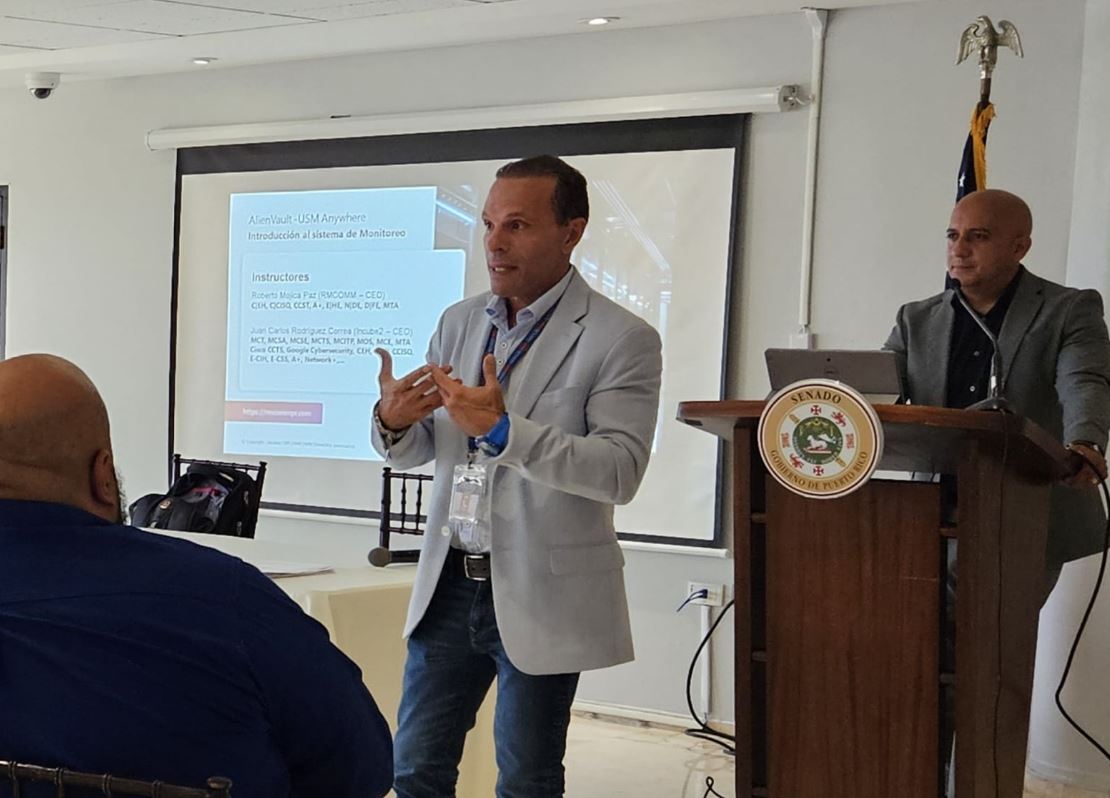
A conference on Security Information and Event Management (SIEM) was held at the Puerto Rico Senate, bringing together public-sector leaders and technology stakeholders to discuss how modern monitoring and incident response can strengthen the Island’s cyber resilience. The session, led by Roberto Mojica Paz, focused on practical strategies to detect threats faster, improve visibility across government networks, and turn security logs into actionable intelligence.
In an era where ransomware, credential theft, and supply-chain compromises increasingly target public institutions, the conference emphasized a clear message: cyber defense is not only a technical issue—it is an operational and governance priority.
Why SIEM Matters in Government
A SIEM is designed to consolidate security data and present it in a way that supports rapid decision-making. According to the U.S. National Institute of Standards and Technology (NIST), a SIEM tool is an application that gathers security data from information system components and presents it as actionable information through a single interface.
In practical terms, this means bringing together logs and alerts from sources such as:
-
Firewalls, routers, and VPN systems
-
Windows/Linux servers and endpoints
-
Identity systems (e.g., directory services, MFA)
-
Cloud platforms and SaaS services
-
Security tools (EDR, email security, web gateways)
By centralizing data, security teams can move from “isolated alerts” to a more complete story of what is happening across networks, accounts, and devices.
Core Topics Covered
During the session, Mojica Paz explained that a mature SIEM program is not only about collecting logs—it’s about building a repeatable process for detection, investigation, and response.
Key discussion themes included:
1) Threat Detection and Faster Investigations
SIEM platforms support threat detection and incident management by collecting and analyzing security events in near real time, while also enabling historical investigation.
2) Reducing “Noise” and Prioritizing High-Value Alerts
A major challenge discussed was alert fatigue—when teams face too many low-quality alerts and miss what matters. The conference highlighted the need to define clear use cases (e.g., privileged account misuse, abnormal authentication patterns, lateral movement) and tune detection rules to local realities.
3) Security Operations and Governance
For government environments, SIEM success depends on governance decisions that include:
-
Log retention periods and storage strategy
-
Evidence handling and chain-of-custody expectations
-
Access controls to sensitive logs
-
Privacy considerations and data minimization
-
Inter-agency coordination during incidents
Demonstration Focus: Turning Logs into Action
A SIEM becomes truly valuable when it helps teams connect the dots. The conference featured a practical walkthrough concept showing how telemetry from different systems can be correlated into one incident narrative—for example:
-
Multiple failed logins followed by a successful login from an unusual location
-
A privileged group membership change
-
A new scheduled task or suspicious PowerShell activity
-
Outbound connections to known malicious infrastructure
From there, the session discussed how organizations can evolve from manual triage to more consistent workflows—especially when SIEM is integrated with structured incident response.
As agencies modernize IT environments and expand digital services, cyber monitoring must evolve at the same pace. A well-designed SIEM program can serve as the operational backbone of a Security Operations Center (SOC)—helping protect public services, reduce downtime, and improve confidence in government systems.